
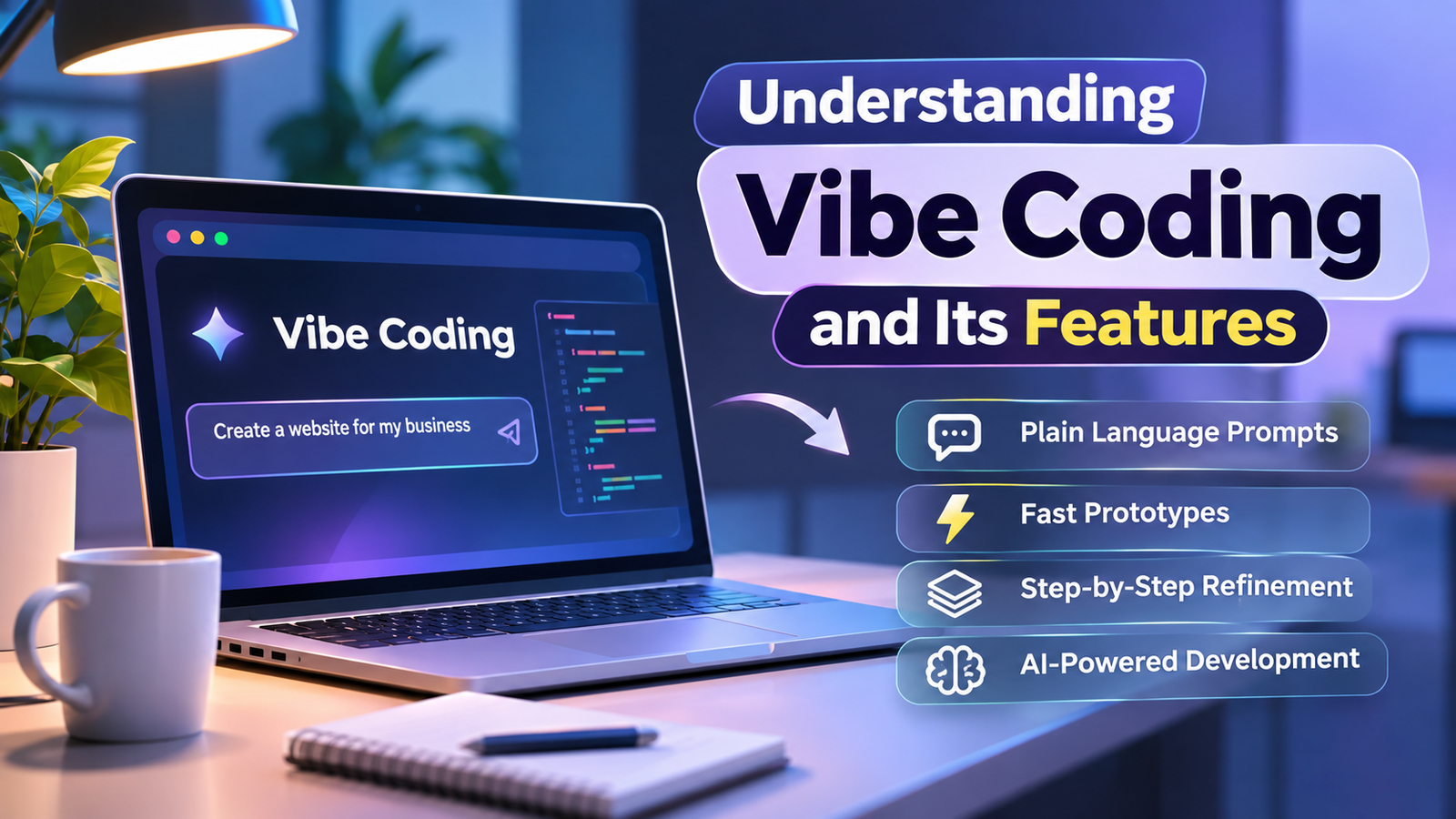
A website idea can now move from one typed sentence to a working page within minutes. That speed is the main appeal of vibe coding, a method that is starting to influence web design in Melbourne and across Australia. This blog explains what the term means, which features define it, and where it suits a real website project.
What Is Vibe Coding?
Andrej Karpathy, a co-founder of OpenAI, introduced the term in February 2025. He described a style of building software where you rely on AI and stop worrying about the code itself. Collins Dictionary later named it its Word of the Year for 2025, defining it as the use of artificial intelligence, prompted by natural language, to assist with writing computer code.
The process is simple. You describe what you want in plain English, such as a landing page for a plumber with a booking form. An AI tool writes the code, you review the result, and you request changes until it looks right.
What Are the Main Features of Vibe Coding?
Several features set this approach apart from traditional development:
- Plain language prompts instead of written code
- Fast first drafts, often within minutes
- Step-by-step refinement through follow-up instructions
- Automatic generation of HTML, CSS and JavaScript
- A lower barrier for people with no coding background
Prompts are the centre of the method. The quality of the output depends on how clearly the request is written. A prompt that says “make a website” produces a generic page, while one that names the audience, colours, sections and required forms produces something far closer to what you need.
Refinement is the second feature worth understanding. Instead of editing lines of code, you give feedback such as “make the header smaller” or “add a pricing table below the services section”. The tool updates the code, and you check the change on screen.
Accessibility for non-developers is the third. Business owners, marketers and designers can build working pages without learning a programming language, which widens who can take part in early website planning.
How Does a Vibe Coding Project Work?
Picture a café owner who wants a simple page for a new weekend menu. She types a short brief describing the menu, the opening hours and the colour scheme. The AI tool returns a page in under a minute. She asks for a larger photo area and a map, then tests the page on her phone before sharing it.
That example shows the usual cycle: prompt, generate, review, refine and publish. Each loop is short, which makes the method useful for testing ideas before committing a larger budget.
How Is Vibe Coding Different From No-Code Tools?
No-code platforms rely on drag-and-drop builders with fixed blocks and templates, so the output stays inside what the platform allows. Vibe coding generates real code files, which a developer can open, edit and host anywhere. That difference gives more freedom, though it also means the quality of the code depends on the AI tool and on whoever reviews it. Neither method is better in every case, because the right choice depends on the size of the project, the budget and the need for custom features.
Where Does Vibe Coding Work Well?
Vibe coding suits projects where speed matters more than long-term complexity. Common uses include:
- Quick prototypes to show a client or team
- Single landing pages for a campaign
- Internal tools such as simple calculators or trackers
- Layout ideas before a designer builds the final version
What Are the Limits of Vibe Coding?
AI-written code still needs checking. Generated code can contain security gaps, and the OWASP Top 10 lists the most common web application risks, such as broken access control and injection flaws, that any site handling user data should be tested against. Performance, accessibility and search engine structure also need attention, because an AI tool may produce a page that looks fine but loads slowly or lacks a proper heading order. For instance, a generated contact form may look correct while accepting spam submissions because it has no validation.
Long-term upkeep is another concern. Code produced by repeated prompts can become messy, and a developer who did not write it may find it hard to update later. For businesses investing in web design in Melbourne, these points matter because a website must stay secure, fast and easy to maintain for years rather than weeks.
How Do Designers Combine Vibe Coding With Standard Methods?
Professional teams will probably use AI tools for early drafts and repetitive tasks. In an hour a designer could create three layout variants, choose one and then recreate it with tested components, clean code and brand-approved fonts. Strategists look at page structure to make sure it is discoverable in search results and developers manually check forms, payment steps and how data is handled.
Teams that offer website design and development usually follow this pattern, where tools support the work and people stay responsible for the result.
What Should You Do Next?
Start with a small, low-risk project such as a single event page, and keep anything involving payments or customer data out of the first attempt. Decide in advance who will review the code and who will maintain the page after launch. A clear owner for those two tasks prevents most of the confusion that appears once a site goes live.
Not sure where AI-assisted building fits in your next website? Our team at Make My Website can help you plan a site that is fast, secure and built to last.